Low Tox Bug Spray Swaps for Kids and Families: Realistic Options That Actually Work

Low tox bug spray swaps for kids and families (without the fear spiral)
If you’ve ever stood in the bug spray aisle holding two bottles while silently spiraling about ingredients, hi. Same. 😂
Because somehow bug spray became one of those topics where the internet makes moms feel like they have to choose between:
coating their children in “toxic chemicals”
or whispering lavender oil into the wind and hoping the mosquitoes respect boundaries
And honestly? Most of us are just trying to keep our kids from becoming an all-you-can-eat buffet at soccer practice.
This is one of those areas where I really believe grace in the grey matters. Bugs are annoying, yes, but they can also carry real risks depending on where you live, the season, and what your family is doing. At the same time, I don’t think every single backyard evening requires panic or perfection either.
Low tox living was never meant to make us fearful of everything. It’s about awareness, discernment, and choosing what makes sense for your family in your season.
So let’s talk about realistic low tox bug spray swaps, what the different options actually are, and how I personally think through them as a mom who wants to reduce unnecessary exposure without ignoring reality.
SHOP MY FAVS ON MY AMAZON STOREFRONT (and then keep reading!)
Why Are Moms Looking for Low Tox Bug Spray Alternatives?
I think a lot of moms start paying attention to bug sprays for the same reason they start reading labels on snacks or swapping out candles after kids.
You become more aware.
You start realizing how many products we use every single day and you naturally begin wondering:
“Do I actually need the strongest thing possible for this?”
“Are there gentler options?”
“What’s effective and realistic?”
“Can I lower exposure without making life harder?”
And honestly, those are good questions.
The hard part is that the crunchy internet can sometimes swing to extremes. Either everything conventional is poison, or every concern is dismissed completely. Meanwhile, most moms are just trying to survive summer with minimal bug bites and maybe enjoy a popsicle outside in peace.
I really think this conversation deserves nuance.
Because yes, some ingredients have more research concerns than others. But also? Tick-borne illness is real. Mosquito-borne illness is real. Context matters.
Are Conventional Bug Sprays Toxic?
This is where I want us to collectively exhale for a second.
“Toxic” is one of those words that gets thrown around online with very little context. Dose matters. Frequency matters. Exposure matters. Situation matters.
That doesn’t mean you can’t care about ingredients. I obviously do. But I also don’t think fear should be the thing making decisions for us.
Instead of thinking in black and white, I like to think in categories:
What’s lowest risk?
What’s most effective?
What situation are we dealing with?
What trade-offs am I personally comfortable with?
There’s a difference between:
spraying your child daily for no reason
and using a more effective bug spray during peak tick season in a wooded area
Both can exist.
And I think moms deserve information that allows them to make thoughtful choices instead of shame-based ones.
What Are the Different Types of Bug Sprays?
This is where understanding your options really helps.
Not all bug sprays work the same way, and not all “natural” options are equally effective.
Essential Oil-Based Bug Sprays
These are usually made with ingredients like:
citronella
lemongrass
peppermint
cedarwood
eucalyptus
geranium
These tend to be the most “natural” leaning options and can work fine for low-risk situations like:
sitting on the patio
a quick park trip
playing outside for an hour
casual backyard evenings
But here’s the honest downside: they usually don’t last very long.
Most essential oil sprays need frequent reapplication, especially in humid weather or if kids are sweating, swimming, or running around like tiny caffeinated raccoons.
That doesn’t make them bad. It just means expectations matter.
If you’re spending all day hiking in a heavily wooded tick area, an essential oil spray alone might not be the most realistic option.
DEET
DEET is basically considered the “gold standard” for bug protection, especially for ticks and higher-risk situations.
And I know mentioning DEET in crunchy spaces can make people clutch their organic sourdough starter, but hear me out.
DEET has been studied extensively and is highly effective, especially in areas where:
Lyme disease is common
ticks are a major issue
mosquito-borne illnesses are a concern
That said, some research has raised concerns about neurotoxicity with heavy exposure, which is why many families prefer to limit use unless it feels truly necessary.
Personally, I think there’s a time and place for it.
A week-long camping trip in a high-risk tick area? That may look different than an hour in your suburban backyard.
This is exactly what I mean when I talk about grace in the grey.
Picaridin
Picaridin is honestly kind of my personal sweet spot for a lot of situations.
It’s generally considered:
highly effective
less greasy than DEET
lower odor
less irritating on skin for many people
A lot of moms looking for a balanced option between “fully natural” and “maximum conventional protection” end up liking picaridin.
I personally appreciate that it tends to feel more wearable and realistic for everyday use.
OLE/PMD (Oil of Lemon Eucalyptus)
This one is interesting because it’s plant-derived but actually has research supporting effectiveness.
That’s important because not every “natural” ingredient has good evidence behind it.
OLE/PMD can be a really solid middle-ground option for families wanting:
a more natural-leaning product
longer-lasting protection than essential oils alone
something supported by actual data
It typically doesn’t last quite as long as DEET, but it often performs better than standard essential oil blends.
One thing to note is that OLE/PMD products are generally not recommended for children under 3, so always check labels and age guidance.
What’s the Best Low Tox Bug Spray for Kids?
I know this is the question moms are actually Googling at midnight while scratching mosquito bites on their toddler. 😂
And honestly? The answer depends on:
your child’s age
where you live
how long you’ll be outside
what bugs are common in your area
your comfort level
But here’s a realistic breakdown.
For Low-Risk Backyard Play
You could absolutely start with:
essential oil sprays
citronella-based products
wearable repellents
bug-reducing clothing choices
timing outdoor play strategically
Just know you’ll likely need to reapply more often.
For Moderate Everyday Use
This is where many families like:
picaridin sprays
OLE/PMD products
stronger plant-based options
These often strike a nice balance between effectiveness and lower irritation concerns.
For High Tick or Mosquito Risk Areas
This may be where DEET makes sense temporarily.
And I really want moms to hear this clearly:
using an effective product in a high-risk situation does not make you a “bad crunchy mom.”
Protecting your child matters too.
What Are Some Realistic Ways to Reduce Bugs Naturally?
This is honestly one of my favorite approaches because sometimes prevention helps reduce how much spray you need in the first place.
And I love anything that lowers exposure without adding stress.
Dress Strategically
Simple things can help a lot:
lightweight long sleeves
long pants in grassy areas
socks with sneakers
light-colored clothing for tick visibility
Not glamorous. But effective.
Avoid Peak Mosquito Times
Mosquitoes tend to be worse:
early morning
dusk/evening
after rain
around standing water
If your kids are super sensitive to bites, timing outdoor activities differently can help.
Use Yard Support
We personally like focusing on making the environment less bug-friendly instead of relying only on sprays.
Some lower tox yard options include:
cedar granules
mosquito-reducing yard sprays
removing standing water
keeping grass trimmed
citronella candles
mosquito repellent diffusers
It’s not about creating a perfectly bug-free backyard. It’s just about stacking small supportive habits together.
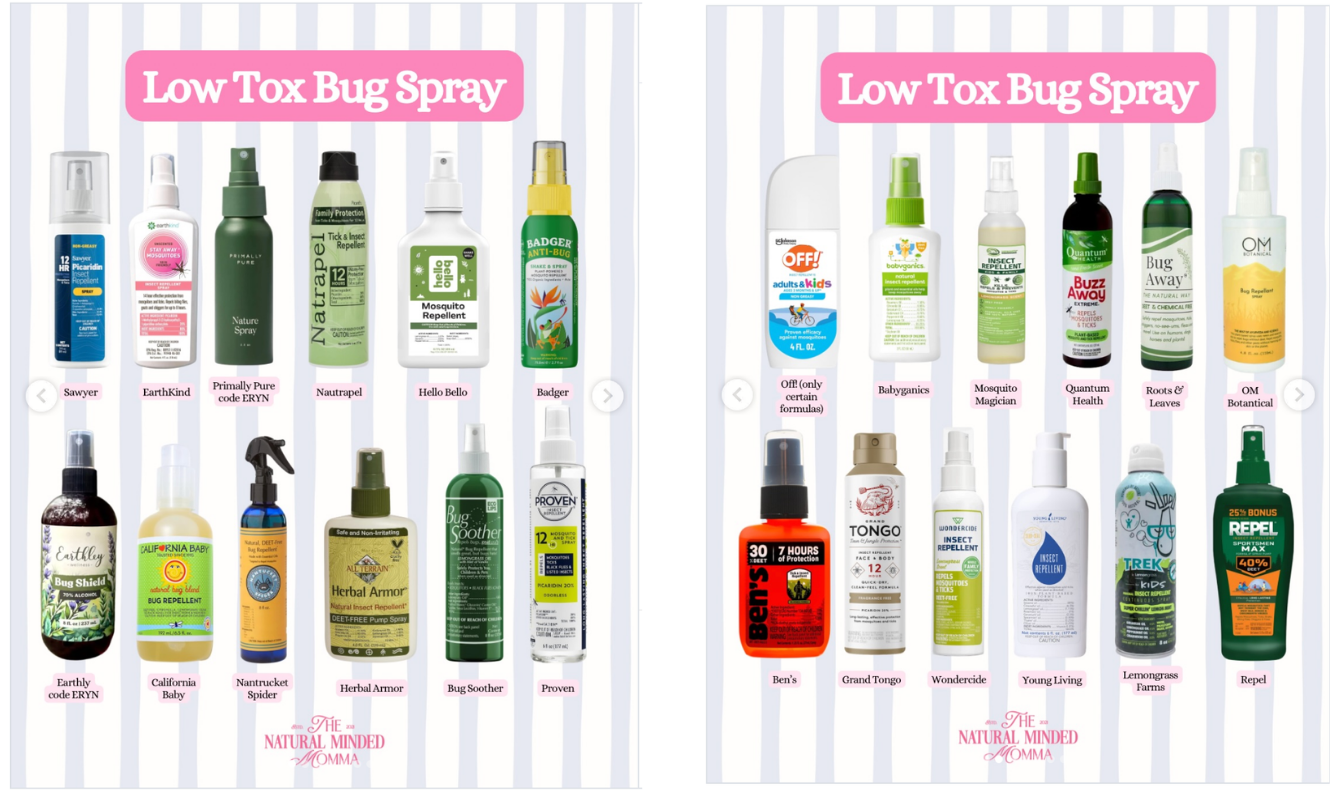
Our Favorite Low Tox Bug Spray Options
Again, this is not about perfection. It’s just about finding what works for your family.
Some of the options we personally like or that tend to work well for many families include:
Essential Oil-Based Options
Primally Pure
Earthley
Hello Bello
Badger
California Baby
Nantucket Spider
Bug Soother
Picaridin-Based Options
Sawyer
Natrapel
Proven
OLE/PMD Options
Repel Lemon Eucalyptus
Wondercide certain products
Other Helpful Bug Control Options
Cliganic mosquito patches and bracelets
citronella candles
mosquito repellent diffusers
cedar-based yard products
Again, none of these are magic. And honestly, some natural options work better for some families than others.
That’s okay.
Low tox living is often a lot of experimenting and figuring out what realistically fits your life.
What Can You Use for Bug Bites Naturally?
Even with the best prevention, kids are still gonna get eaten alive sometimes. Especially the ones who somehow attract every mosquito within a 10-mile radius.
A few gentler bug bite support options moms often like include:
itch sticks
calendula-based creams
drawing salves
colloidal oatmeal products
cooling balms
topical skin sprays
And honestly? Sometimes the best treatment is distracting your child with a popsicle and pretending you totally know where the Band-Aids are.
Are Natural Bug Sprays Actually Effective?
The honest answer?
Sometimes yes. Sometimes not enough.
And I know that’s not the dramatic internet answer people want, but it’s the truth.
Natural bug sprays can absolutely help in lower-risk situations. But effectiveness varies a lot depending on:
ingredients
concentration
environment
sweat/water exposure
bug population
how often you reapply
This is why I think understanding the spectrum of options matters so much more than trying to find one universally “perfect” product.
Because low tox living is rarely about perfection anyway.
It’s about informed choices.
How I Personally Think About Low Tox Bug Protection
If I can leave you with anything, it’s this:
You do not have to earn some imaginary crunchy badge by suffering through preventable bug exposure.
And you also don’t need to panic every time your family uses a stronger product when the situation calls for it.
This is one of those areas where I think discernment matters more than rigid rules.
For me personally, I tend to think through bug protection like this:
low-risk situation = gentler options first
moderate risk = picaridin or stronger plant-based products
high-risk tick exposure = prioritize effectiveness
That’s my personal comfort zone. Yours may look a little different.
And that’s okay.
Final Thoughts: It’s About Being Intentional, Not Perfect
I think one of the hardest parts of motherhood today is feeling like every decision carries the weight of the world.
But low tox living was never supposed to make moms feel paralyzed.
You do not have to do everything perfectly to make meaningful changes for your family.
Sometimes low tox living looks like:
choosing the gentler option when you can
using the stronger option when it truly matters
reducing exposure where it realistically fits
learning as you go
holding space for nuance
There is grace in the grey.
Always.
So if you’re standing in the bug spray aisle this summer feeling overwhelmed, here’s your reminder:
you don’t need fear to guide your decisions.
Awareness is enough.
Discernment is enough.
Doing your best with the information you have is enough.
And whether your kid is covered in essential oils, picaridin, or currently sticky from watermelon juice and sunscreen at the splash pad… you’re still a good mom.